Proprioceptive Neuromuscular Facilitation (PNF)
Proprioceptive Neuromuscular Facilitation (PNF)
At Neurowalk, we understand that recovering from a neurological condition is about much more than improving muscle strength. It is about helping people regain the confidence to walk independently, use their hands comfortably, maintain balance, and return to the activities that make everyday life meaningful. Every patient who comes to us has a unique story, different challenges, and personal goals. That is why our neurorehabilitation team believes in creating treatment plans that are tailored to each individual rather than following a one-size-fits-all approach. One of the most effective techniques we use to achieve this is Proprioceptive Neuromuscular Facilitation (PNF).
PNF is an internationally recognized, evidence-based rehabilitation approach that helps improve communication between the brain, nerves, and muscles. When a person experiences a neurological condition such as a stroke, Parkinson’s disease, multiple sclerosis, traumatic brain injury, spinal cord injury, cerebral palsy, or other disorders affecting the nervous system, this communication is often disrupted. As a result, movements may become slow, weak, stiff, uncoordinated, or difficult to control. PNF is designed to restore these movement patterns by encouraging the nervous system to activate muscles in a more coordinated and functional way.
One of the reasons PNF is so effective is that it focuses on how we naturally move in everyday life. Think about reaching for a seat belt, combing your hair, opening a cupboard, getting out of a chair, or taking a step while walking. These activities don’t involve just one muscle or one joint. They require different parts of the body to work together in a smooth, coordinated pattern. PNF uses these same natural movement patterns during rehabilitation, making therapy practical and meaningful rather than limited to isolated exercises.
At Neurowalk, every PNF session begins with a detailed assessment. Our therapists take the time to understand not only the diagnosis but also how the condition is affecting the person’s daily life. We observe posture, balance, walking pattern, muscle control, coordination, joint mobility, and functional abilities before planning treatment. This helps us identify where the movement is breaking down and how we can guide the body towards a more efficient and natural pattern.
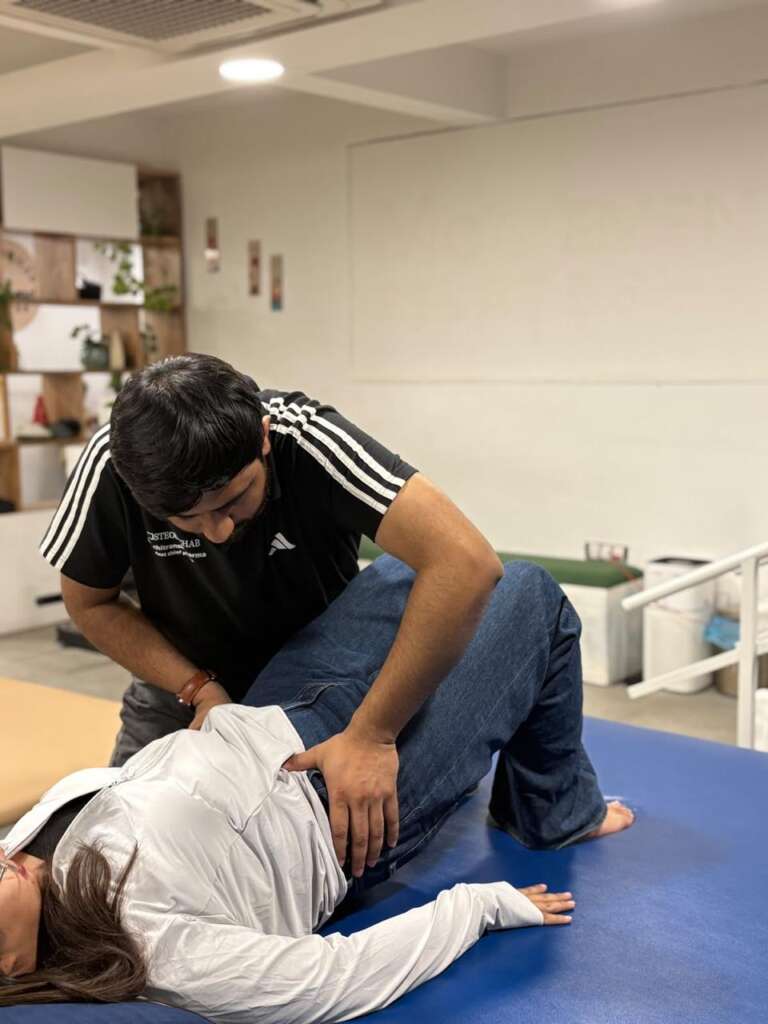
During treatment, our therapists use skilled hands-on techniques to guide movement while providing gentle resistance whenever appropriate. The amount of resistance is carefully adjusted according to each patient’s strength and stage of recovery. The purpose is never to make the movement difficult but to help the nervous system recognize and activate the correct muscles. Throughout the session, our team provides verbal encouragement, tactile feedback, and continuous monitoring to ensure that every movement is performed safely and effectively.
PNF is much more than a strengthening technique. It helps improve balance, posture, flexibility, coordination, endurance, trunk stability, and overall movement control. For someone recovering from a stroke, it may help improve walking, reaching, standing balance, and use of the affected arm. For individuals living with Parkinson’s disease, it can assist in improving posture, reducing movement rigidity, increasing step length, and making daily activities easier. Patients recovering from spinal cord injuries or traumatic brain injuries often benefit from improved trunk control, smoother movement, and greater functional independence.
An important principle behind PNF is neuroplasticity, which is the brain’s ability to reorganize itself after an injury. Every time a patient performs a movement correctly, the brain receives valuable information that helps strengthen new neural connections. With repeated, purposeful practice, these connections become stronger, allowing movements to become more coordinated over time. This is why consistency is such an important part of neurological rehabilitation. Small improvements during each therapy session gradually build into meaningful changes in everyday life.
At Neurowalk, we believe that rehabilitation should always be goal-oriented. Instead of focusing only on exercises, our therapists focus on helping patients achieve activities that matter to them. For one person, the goal may be walking independently again. For another, it may be climbing stairs safely, returning to work, holding a grandchild, writing with confidence, or simply getting dressed without assistance. Every treatment session is planned with these personal goals in mind, making rehabilitation more engaging and rewarding
We also understand that recovery continues beyond the clinic. That is why our team works closely with family members and caregivers, helping them understand the rehabilitation process and teaching safe ways to continue practice at home. When patients receive consistent guidance both inside and outside the clinic, they often feel more confident and motivated throughout their recovery journey.
One of the greatest strengths of PNF is that it can be adapted to patients at different stages of recovery. Whether someone is just beginning rehabilitation after a neurological injury or has been living with a neurological condition for many years, the techniques can be modified according to their abilities and goals. As patients improve, our therapists gradually introduce more challenging activities that encourage greater independence and prepare them for real-life situations.
Recovery from a neurological condition is rarely a straight path, and every patient’s journey is different. There may be days that feel challenging, but there are also milestones worth celebrating. Standing independently for the first time, taking a few confident steps, reaching for an object without assistance, or using the affected hand during daily activities are all signs of progress. At Neurowalk, we believe these moments deserve recognition because they reflect the remarkable ability of the brain and body to adapt and recover.
PNF is not used in isolation. Depending on the patient’s condition, our neurorehabilitation team often combines it with other evidence-based approaches such as Motor Relearning Program, Mirror Therapy, Constraint-Induced Movement Therapy, Balance Training, Dual Task Training, Functional Training, and advanced neurorehabilitation technologies. This integrated approach allows us to address every aspect of recovery while ensuring that treatment remains personalized and clinically meaningful.
At Neurowalk, PNF is more than just a treatment technique—it is part of our commitment to helping people move with greater confidence, independence, and purpose. Through detailed assessment, evidence-based rehabilitation, and compassionate care, our team supports every patient in taking meaningful steps towards a better quality of life.