Parkinson's Disease
Parkinson's Disease
Parkinson’s disease is a progressive neurological condition that affects the way a person moves. It develops when certain nerve cells in the brain gradually stop producing enough dopamine, which is a chemical that helps control smooth and coordinated movement. As dopamine levels decrease, everyday movements can become slower, smaller, and more difficult to perform. Parkinson’s disease usually develops gradually, and many people notice subtle changes before the symptoms become more obvious. Although it is a long term condition, the right rehabilitation and regular exercise can help people stay active, independent, and confident for many years.
The symptoms of Parkinson’s disease are different for every individual. Some people may notice a slight tremor in one hand while resting, while others may experience stiffness in their arms or legs. Many people find that their walking becomes slower, their steps become shorter, and turning around becomes more difficult. It may also become harder to get up from a chair, roll over in bed, or perform tasks that once felt simple. Some individuals notice changes in their handwriting, facial expressions, or voice. Balance problems can also develop over time, increasing the risk of falls and making people feel less confident during daily activities.
Parkinson’s disease affects much more than movement alone. Many individuals experience fatigue, reduced endurance, difficulty concentrating, disturbed sleep, and changes in mood. These symptoms can make daily life more challenging and may affect confidence, social interactions, and overall quality of life. Since the condition progresses differently for each person, every individual requires a rehabilitation plan that matches their current abilities and personal goals.
One of the most important things to understand is that movement is medicine for people living with Parkinson’s disease. Regular, structured exercise has been shown to improve mobility, balance,
flexibility, strength, and walking ability. Staying physically active can also help reduce stiffness, improve posture, and support better overall function. Starting rehabilitation early allows individuals to build healthy movement habits before the condition begins to interfere significantly with daily life.
At NeuroWalk, we believe that every person with Parkinson’s disease should receive rehabilitation that is personalised and evidence based. We begin with a detailed assessment to understand how the condition is affecting movement, posture, balance, walking, coordination, strength, and daily activities. This helps us design a treatment program that focuses on improving the person’s specific challenges while supporting long term independence.
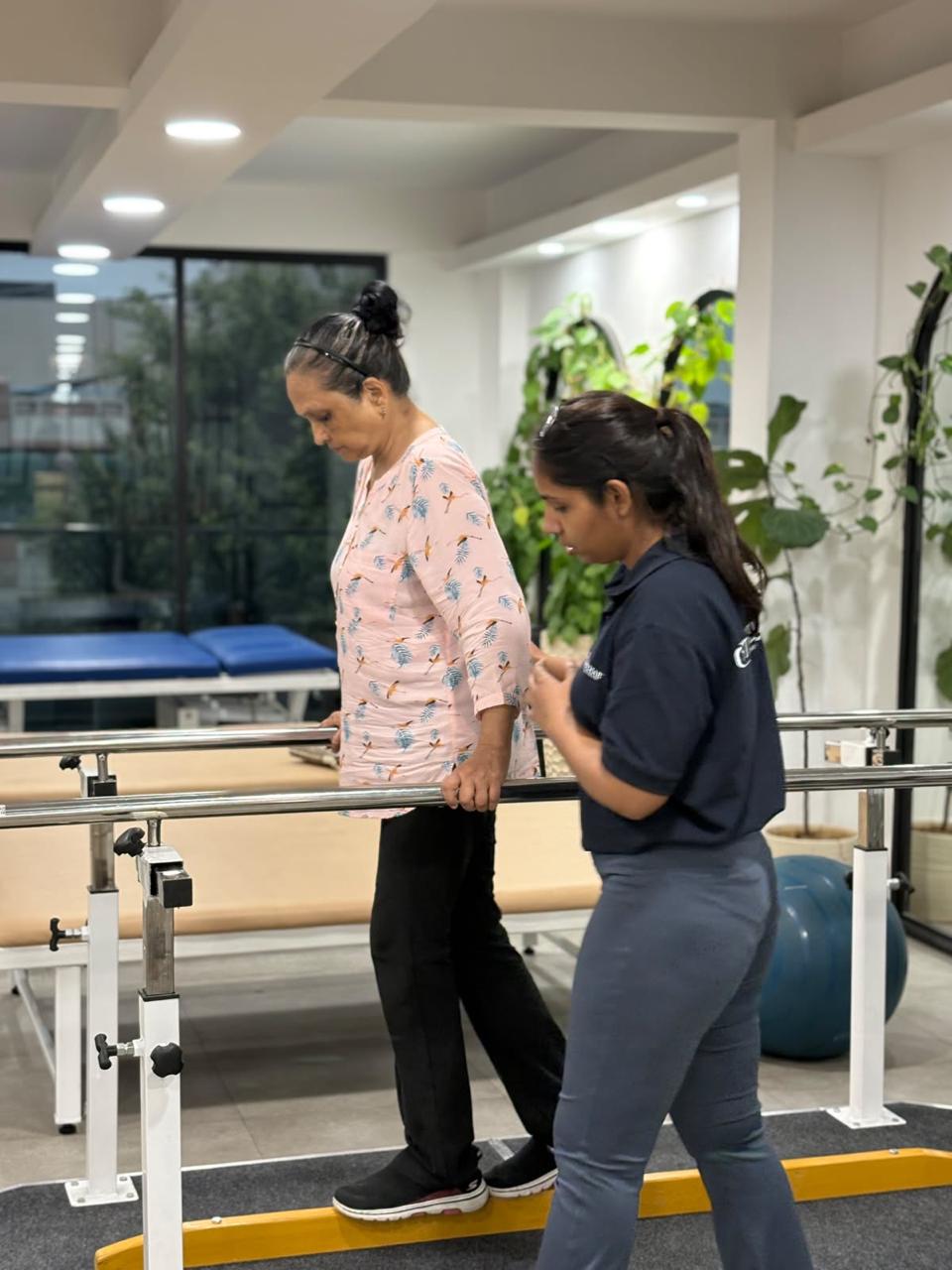
Our neurophysiotherapy sessions focus on helping individuals move with greater confidence and efficiency. Treatment may include balance training, gait training, posture correction, flexibility exercises, strength training, functional movement practice, and coordination exercises. We also work on improving larger body movements because people with Parkinson’s disease often develop smaller and slower movement patterns. Practising bigger, more purposeful movements can make everyday activities such as walking, reaching, turning, and getting out of a chair much easier.
Walking is often one of the biggest goals after stroke. Some people may require assistance in the beginning, while others may only need help improving their speed, confidence, or endurance. Through structured gait training and functional rehabilitation, we help individuals practise safe and efficient walking in different environments. We also work on transfers, stair climbing, standing balance, and activities that improve independence both at home and in the community.
Walking difficulties are one of the most common concerns in Parkinson’s disease. Some individuals may feel that their feet become stuck to the floor for a few moments before they can take a step. Others may notice that they shuffle while walking or lose balance while turning. Through structured gait training and task specific rehabilitation, we help individuals improve their walking pattern, increase confidence, and reduce the risk of falls. We also practise activities that are meaningful in everyday life so that improvements achieved during therapy can be carried over into home and community environments.
Rehabilitation is not only about exercise sessions in the clinic. Long term success depends on staying active every day. We encourage individuals to continue practising their home exercise program, remain physically active, and participate in activities they enjoy whenever possible. Consistency plays a major role in maintaining mobility and slowing the impact of movement related symptoms over time.
Family support is also an important part of the rehabilitation journey. Living with Parkinson’s disease can sometimes be physically and emotionally demanding, both for the individual and their loved ones. We work closely with families to help them understand the condition, provide guidance on safe mobility, and create strategies that make everyday activities easier and more comfortable.
At NeuroWalk, our goal is to help people with Parkinson’s disease continue living active and meaningful lives. We focus on improving movement, increasing confidence, and helping individuals remain as independent as possible throughout every stage of their rehabilitation journey. With personalised neurophysiotherapy, regular practice, and the right support, many people with Parkinson’s disease continue to achieve meaningful improvements in their mobility, function, and overall quality of life.