Gait Training
Gait Training
Walking is something most of us never have to think about. We stand up, take a step, turn around, avoid obstacles, climb stairs, or walk across a busy road without consciously planning every movement. After a neurological condition, however, walking can become one of the greatest challenges a person faces. Every step may require extra effort, concentration, and confidence. Some people feel that one leg is too weak to support them, while others notice that they drag their foot, lose balance while turning, or become exhausted after walking only a short distance. At Neurowalk, Gait Training is one of the core components of our neurorehabilitation program because we understand that walking is not just about mobility. It is about independence, confidence, and returning to everyday life.
Gait Training is an evidence-based rehabilitation approach that focuses on improving the quality, safety, and efficiency of walking. The goal is not simply to help someone walk from one place to another. Our aim is to help patients develop a walking pattern that is as natural, comfortable, and functional as possible. Every patient has a different reason for wanting to walk better. Some hope to move safely around their home without assistance, others wish to return to work, while many simply want the confidence to go for a walk with their family again. Understanding these personal goals helps our team create a rehabilitation plan that is meaningful for each individual.
Walking is a complex activity that depends on the smooth coordination of many body systems. The brain plans the movement, the spinal cord carries signals to the muscles, the joints provide mobility, the muscles generate strength, and the balance system keeps the body stable. If even one part of this system is affected by a stroke, Parkinson’s disease, spinal cord injury, traumatic brain injury, multiple sclerosis, cerebral palsy, peripheral nerve injury, or another neurological condition, walking can become difficult.
Walking is a complex activity that depends on the smooth coordination of many body systems. The brain plans the movement, the spinal cord carries signals to the muscles, the joints provide mobility, the muscles generate strength, and the balance system keeps the body stable. If even one part of this system is affected by a stroke, Parkinson’s disease, spinal cord injury, traumatic brain injury, multiple sclerosis, cerebral palsy, peripheral nerve injury, or another neurological condition, walking can become difficult. This is why successful gait rehabilitation requires much more than strengthening the legs alone.
At Neurowalk, every gait rehabilitation program begins with a detailed assessment. Our neurorehabilitation team carefully observes how the patient walks rather than simply whether they are able to walk. We assess posture, step length, walking speed, foot placement, weight transfer, arm swing, trunk control, balance, endurance, and coordination. We also identify factors such as muscle weakness, spasticity, joint stiffness, reduced sensation, or fear of falling that may be influencing the walking pattern. This thorough evaluation allows us to identify the root cause of the problem and develop a treatment plan that addresses the patient’s specific needs.
No two patients walk in exactly the same way, and therefore no two gait training programs should be identical. For someone in the early stages of recovery, therapy may begin with learning to shift weight safely from one leg to the other or practising standing with good alignment. Others may be ready to work on stepping, improving walking speed, negotiating obstacles, climbing stairs, or walking over uneven surfaces. Every activity is progressed gradually according to the patient’s confidence and ability, ensuring that rehabilitation remains challenging while always prioritizing safety.
One of the most important aspects of gait training is repetition. Every correctly performed step provides the brain with valuable sensory and motor information. Over time, these repeated movements encourage neuroplasticity, allowing the brain to strengthen existing pathways and create new ones that support walking. This is why consistent practice is so important in neurological rehabilitation. Improvement rarely happens after a single session, but every correctly practised step contributes to long-term recovery.
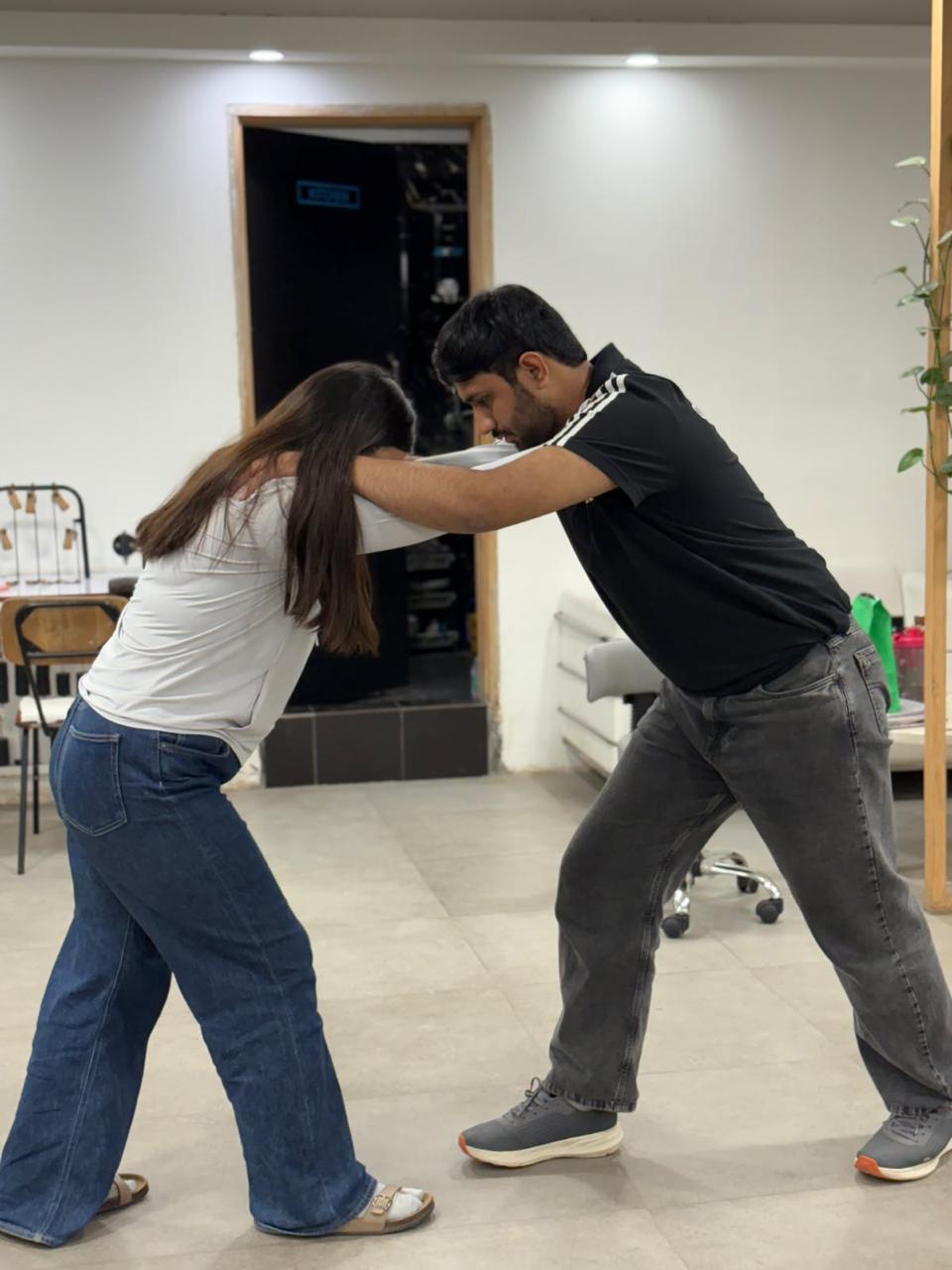
At Neurowalk, our therapists provide continuous feedback throughout each session. Sometimes this involves gentle hands-on guidance to improve posture or weight transfer. At other times, verbal cues help patients develop a smoother walking pattern or become more aware of their movements. As progress is made, our therapists gradually reduce assistance, encouraging patients to rely more on their own movement while remaining confident and safe.
Walking confidently also requires more than simply moving forward in a straight line. Everyday life presents many different situations that challenge balance and coordination. Patients need to turn, stop suddenly, avoid obstacles, walk through crowded areas, carry objects, or change speed depending on their surroundings. During rehabilitation, our team gradually introduces these real-world challenges so that patients are better prepared for daily life outside the clinic.
Depending on the individual’s needs, gait training may be combined with advanced rehabilitation techniques such as Body Weight Supported Treadmill Training, PNF, Motor Relearning Program, Balance Training, Dual Task Training, robotic-assisted rehabilitation, or sensory re-education. Combining different approaches allows us to address every factor influencing walking rather than focusing on just one aspect of movement. Our goal is always to provide rehabilitation that is comprehensive, evidence-based, and personalized.
We also believe that family involvement plays an important role in recovery. Our therapists educate caregivers about safe walking assistance, the appropriate use of walking aids when required, and simple strategies that encourage continued practice at home. Rehabilitation does not stop when a therapy session ends. Consistent practice in a safe environment helps reinforce the progress achieved during treatment.
For many patients, the first independent step is a moment they never forget. It represents much more than movement. It represents hope, determination, and the possibility of returning to a more active life. Watching patients progress from needing assistance to walking with confidence is one of the most rewarding parts of neurological rehabilitation, and our team is privileged to be part of that journey.
At Neurowalk, Gait Training is designed around one simple goal: helping every patient move through life with greater safety, confidence, and independence. Through detailed assessment, individualized treatment, and evidence-based rehabilitation, our neurorehabilitation team supports each person in taking meaningful steps towards a better quality of life.
When people hear the word Pilates, they often think of fitness studios or general exercise classes. However, NeuroPilates is very different. It is a specialized rehabilitation approach that adapts the principles of Pilates for people living with neurological conditions. Rather than focusing on fitness alone, NeuroPilates aims to improve posture, body awareness, breathing, balance, coordination, and controlled movement. At Neurowalk, we use NeuroPilates as part of a comprehensive neurorehabilitation program to help patients move more efficiently, confidently, and comfortably in their everyday lives.
Many neurological conditions affect the way the body controls movement. Following a stroke, Parkinson’s disease, multiple sclerosis, spinal cord injury, traumatic brain injury, or other neurological disorders, people may experience poor posture, weakness around the trunk, reduced balance, muscle stiffness, or difficulty coordinating movements. These problems often make everyday tasks more tiring because the body has to work harder to maintain stability.
NeuroPilates focuses on rebuilding this foundation so that movement becomes more controlled and energy-efficient.
One of the key principles of NeuroPilates is that every movement begins with stability. Before a person can walk confidently, reach overhead, or climb stairs safely, the body needs a stable base. This stability comes primarily from the muscles of the abdomen, back, pelvis, and diaphragm, which together form the body’s core. When these muscles work efficiently, the arms and legs are able to move with greater control and less unnecessary effort.
At Neurowalk, every NeuroPilates program begins with a detailed assessment conducted by our neurorehabilitation team. We look at posture, breathing patterns, trunk control, flexibility, muscle tone, balance, movement quality, and functional abilities. We also take time to understand the patient’s daily routine, goals, and challenges. Some individuals may struggle to sit upright for long periods, while others may have difficulty maintaining balance during walking or changing positions. Understanding these differences allows us to design a program that is both safe and meaningful.
Unlike traditional exercise programs that focus mainly on the number of repetitions, NeuroPilates emphasizes the quality of movement. Patients are encouraged to move slowly, with control and awareness, while maintaining proper alignment and breathing. Our therapists provide continuous guidance to help patients recognize how their body is moving and make small adjustments that improve movement efficiency. These subtle changes often lead to significant improvements in posture, balance, and overall function over time.
Breathing is another important component of NeuroPilates. Many neurological conditions can alter normal breathing patterns, especially when posture is affected. Controlled breathing helps improve trunk stability, supports better movement, and reduces unnecessary muscle tension. Throughout therapy, our team teaches patients how to coordinate breathing with movement, making exercises feel smoother and less physically demanding
NeuroPilates is suitable for a wide range of neurological conditions, including stroke, Parkinson’s disease, multiple sclerosis, traumatic brain injury, spinal cord injury, and certain balance disorders. Depending on the individual’s abilities, sessions may include exercises performed while lying down, sitting, standing, or during functional activities. Every exercise is carefully adapted to match the patient’s current level of mobility, ensuring that rehabilitation remains both challenging and achievable.
One of the reasons patients enjoy NeuroPilates is that it encourages them to become more aware of their own body. Many neurological conditions reduce body awareness, making movements feel awkward or uncoordinated. Through gentle, controlled exercises, patients gradually develop a better understanding of posture, weight distribution, and movement patterns. This increased awareness often carries over into everyday activities such as walking, getting out of bed, reaching for objects, or maintaining balance while standing.
At Neurowalk, NeuroPilates is not used as an isolated form of treatment. It is integrated with other evidence-based rehabilitation approaches such as PNF, Motor Relearning Program, Balance Training, gait rehabilitation, sensory re-education, and functional task practice. This combination allows us to address multiple aspects of neurological recovery while ensuring that every therapy session contributes to the patient’s overall rehabilitation goals.
Progress in NeuroPilates is measured by improvements that matter in daily life rather than simply completing exercises. Sitting comfortably for longer periods, walking with better posture, turning more confidently, reducing fatigue during daily activities, or feeling steadier while standing are all meaningful signs of recovery. These improvements often help patients become more independent and participate more confidently in family, work, and social activities.
Recovery after a neurological condition is not always about moving faster. Sometimes, it is about moving with better control, greater confidence, and less effort. By strengthening the body’s foundation and improving movement quality, NeuroPilates helps patients develop the stability needed for more efficient and functional movement.
At Neurowalk, NeuroPilates is delivered with the same individualized, evidence-based approach that guides all of our rehabilitation programs. Our neurorehabilitation team works closely with each patient to improve posture, movement control, balance, and body awareness, helping them build a stronger foundation for long-term recovery and a better quality of life.