Bell's Palsy
Bell's Palsy
Bell’s palsy is a condition that causes sudden weakness or paralysis of the muscles on one side of the face. It occurs when the facial nerve becomes inflamed or compressed, affecting the muscles that control facial expressions. Many people wake up one morning and notice that one side of their face feels different. They may find it difficult to smile, close one eye completely, raise an eyebrow, or control the movements of their lips. Although the sudden onset of symptoms can be frightening, Bell’s palsy is not a stroke. It is a separate condition that affects the facial nerve, and with early treatment and appropriate rehabilitation, many people experience significant improvement over time.
The exact cause of Bell’s palsy is not always known, but it is often linked to viral infections that cause swelling around the facial nerve. This swelling prevents the nerve from sending normal signals to the facial muscles, leading to weakness or loss of movement. The severity of symptoms can vary from person to person. Some individuals experience mild weakness, while others may have complete paralysis on one side of the face. Recovery also varies, which is why early assessment and rehabilitation are important.
The symptoms of Bell’s palsy usually appear suddenly and affect only one side of the face. A person may notice that their smile looks uneven, food collects inside the mouth while eating, or liquids leak from one side while drinking. Closing the affected eye may become difficult, causing dryness or irritation. Some people experience changes in taste, increased sensitivity to sound, pain around the ear, or difficulty speaking clearly because of reduced control of the facial muscles. These symptoms can affect confidence, communication, and social interactions, making people feel self conscious during everyday conversations.
One of the biggest concerns for individuals with Bell’s palsy is whether they will recover completely. In many cases, facial movement gradually returns over weeks or months, but recovery depends on the severity of nerve involvement and how early treatment begins. Physiotherapy plays an important role in guiding safe facial muscle rehabilitation and preventing unwanted movement patterns that may develop during recovery. Performing incorrect facial exercises without professional guidance can sometimes delay recovery or lead to abnormal muscle activity, which is why a structured rehabilitation program is recommended.
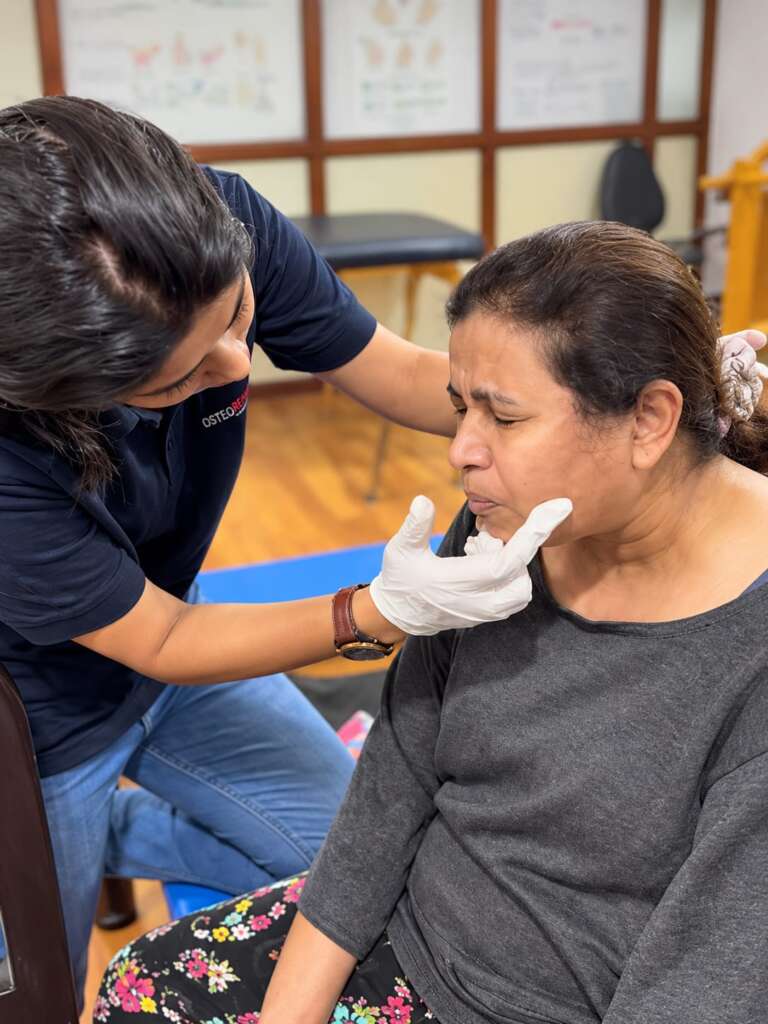
At NeuroWalk, we begin with a detailed assessment to understand the severity of facial muscle weakness, symmetry, muscle control, and functional difficulties. Every individual recovers differently, so rehabilitation is personalised according to the stage of recovery and the person’s specific needs. Our aim is to restore natural facial movement while improving confidence during speaking, eating, drinking, and smiling.
Neurophysiotherapy for Bell’s palsy focuses on improving facial muscle control through carefully guided exercises and movement retraining. Rather than forcing the muscles to work harder, therapy encourages gentle, coordinated movements that help the facial nerve reconnect with the muscles. Mirror based training, facial muscle activation, movement control exercises, and functional facial activities are commonly used according to the individual’s condition. As recovery progresses, exercises are gradually modified to improve facial symmetry and movement quality.
Education is an important part of rehabilitation. Many people feel anxious when they notice little or no movement during the early stages of recovery. Understanding the healing process helps reduce unnecessary worry and encourages individuals to stay consistent with their rehabilitation program. We also provide guidance on protecting the affected eye, maintaining good facial care, and performing home exercises correctly between therapy sessions.
Recovery after Bell’s palsy requires patience because nerves heal slowly. Some people begin noticing improvement within a few weeks, while others may continue recovering over several months. It is important not to compare one person’s recovery with another because every case is different. Regular practice, consistent therapy, and following professional guidance provide the best opportunity for achieving good facial muscle recovery.
Family support also plays an important role during this time. Encouragement and understanding from loved ones can help individuals stay motivated throughout the rehabilitation process. Emotional support is equally important because facial changes can affect self confidence, especially during social interactions. Creating a positive and supportive environment makes the recovery journey much easier.
At NeuroWalk, our goal is to help individuals with Bell’s palsy regain natural facial movement, improve facial symmetry, and restore confidence in their everyday life. Through evidence based neurophysiotherapy, personalised rehabilitation, and compassionate care, we support each individual throughout their recovery journey. With early intervention, regular therapy, and consistent practice, many people achieve meaningful improvements and return to their daily activities with greater comfort and confidence