Constraint-Induced Movement Therapy (CIMT)
Constraint-Induced Movement Therapy (CIMT)
Have you ever noticed that when one hand is injured, you automatically start doing almost everything with the other hand? You brush your teeth, hold your phone, eat your meals, and even open doors using the stronger hand because it feels easier. Now imagine this happening for weeks or months after a stroke or another neurological condition. Gradually, the affected arm is used less and less, not always because it cannot move, but because the brain has learned to depend on the stronger side. This phenomenon is known as learned non-use, and it is one of the biggest barriers to upper limb recovery. At Neurowalk, Constraint-Induced Movement Therapy, commonly known as CIMT, is used to help patients overcome this challenge and rediscover the potential of their affected arm.
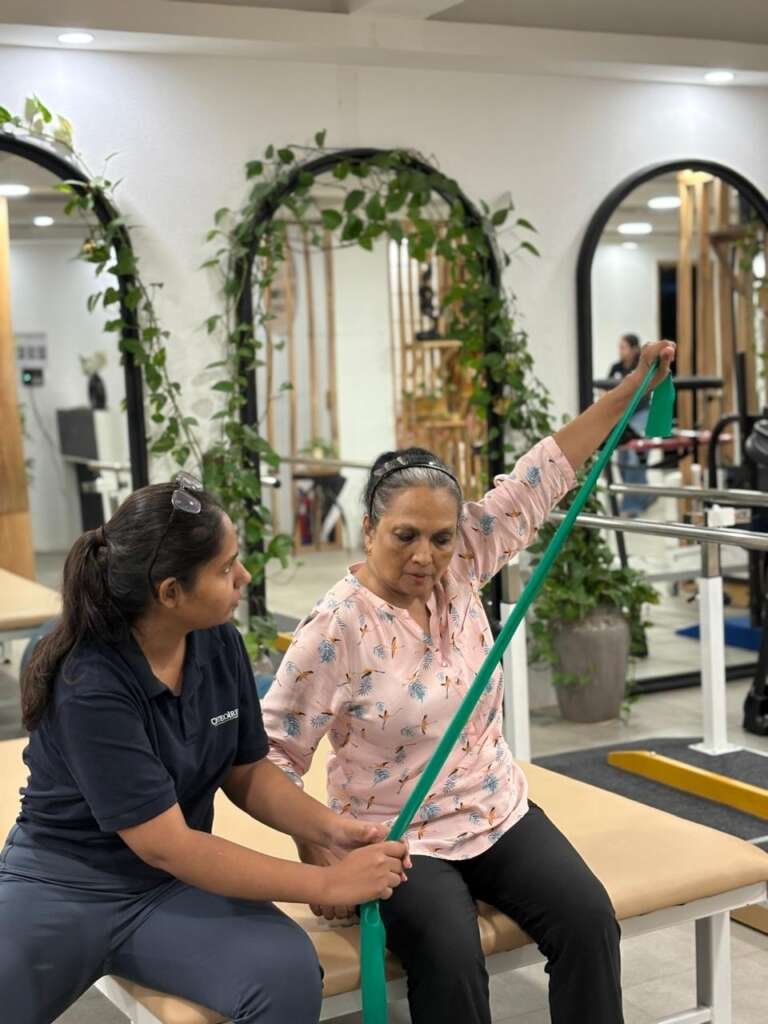
CIMT is an evidence-based rehabilitation approach that encourages individuals to actively use their weaker arm during meaningful daily activities. The aim is not to force movement but to create opportunities for the brain to reconnect with the affected limb. Every successful attempt to reach, grasp, lift, or hold an object provides valuable information to the brain, helping it rebuild the neural pathways responsible for movement.
Many people misunderstand CIMT and assume it simply means tying up the stronger arm. In reality, the therapy is far more thoughtful than that. At Neurowalk, our therapists carefully assess whether a patient is suitable for CIMT before beginning treatment. We look at muscle control, range of motion, hand function, cognition, balance, endurance, motivation, and overall recovery stage. Since every neurological condition is different, the treatment plan is always individualized rather than following a fixed protocol.
Once a patient is ready, therapy focuses on increasing the use of the affected arm in activities that are relevant to everyday life. Instead of repeatedly performing meaningless exercises, patients practise tasks such as picking
up a bottle, holding a spoon, folding clothes, stacking objects, writing, opening containers, or reaching for items placed at different heights. These activities are carefully selected according to the person’s goals and gradually become more challenging as recovery progresses.
One of the reasons CIMT is so effective is because it takes advantage of the brain’s ability to adapt after injury. This process, known as neuroplasticity, allows healthy areas of the brain to take over functions that were affected by neurological damage. However, this adaptation only happens when the brain receives repeated opportunities to practise meaningful movement. By encouraging patients to use their affected arm consistently, CIMT helps strengthen these new neural connections and improves the quality of movement over time.
At Neurowalk, we pay close attention to how a movement is performed rather than simply whether the task is completed. If a patient compensates by leaning excessively, shrugging the shoulder, or using awkward movement patterns, our therapists gently guide them towards a safer and more efficient strategy. Developing good movement habits early is important because these patterns often carry over into everyday life.
Recovery can sometimes feel frustrating, especially during the early stages when movements are slow or require extra effort. Our team understands these challenges and works alongside each patient with patience and encouragement. Small milestones, such as holding a toothbrush independently, lifting a cup with greater control, or fastening a shirt button, are celebrated because they represent meaningful progress in daily life.
Family involvement also plays an important role in CIMT. Our therapists educate caregivers about encouraging safe use of the affected arm during routine activities at home. Simple opportunities, such as using the affected hand to stabilize a plate during meals, hold a towel while folding laundry, or carry lightweight household objects, help reinforce the progress made during therapy sessions. These repeated experiences outside the clinic are often just as valuable as the exercises performed during rehabilitation.
CIMT is most commonly used for individuals recovering from stroke, but it can also benefit selected patients with traumatic brain injury, cerebral palsy, and other neurological conditions where one upper limb is significantly weaker than the other. The therapy is always prescribed after a thorough clinical evaluation because not every patient will benefit from the same rehabilitation approach. Choosing the right intervention at the right stage of recovery is an essential part of achieving successful outcomes.
At Neurowalk, CIMT is rarely used on its own. Depending on the patient’s needs, it may be combined with PNF, Motor Relearning Program, Mirror Therapy, sensory re-education, robotic-assisted rehabilitation, and functional task training. By combining different evidence-based techniques, our team is able to address strength, coordination, sensation, balance, and functional independence together, creating a rehabilitation program that is both comprehensive and patient-centred.
Regaining the use of an affected arm takes time, commitment, and consistent practice, but every movement matters. The first successful reach, the first independent grip, or the first time a patient confidently uses both hands again can be life-changing moments. These are the milestones that remind us why neurological rehabilitation is so rewarding.
At Neurowalk, Constraint-Induced Movement Therapy is delivered with careful clinical reasoning, individualized goal setting, and continuous support. Our neurorehabilitation team works closely with every patient to transform small improvements into meaningful functional recovery, helping them become more independent, confident, and active in their everyday lives.