Ataxia
Ataxia
Ataxia is a neurological condition that affects coordination, balance, and the ability to perform smooth and controlled movements. It usually occurs when there is damage to the cerebellum, which is the part of the brain responsible for coordinating movement, or to the nerve pathways connected to it. People with ataxia often find that their movements become unsteady and less accurate, even though their muscles may still have normal strength. Walking, reaching for objects, speaking, or performing everyday tasks may become difficult because the body is unable to coordinate movements efficiently. While ataxia can be caused by several neurological conditions, injuries, genetic disorders, infections, or strokes, the symptoms can often be managed with structured neurorehabilitation that focuses on improving function and independence.
The symptoms of ataxia vary from person to person depending on the cause and severity of the condition. Many individuals notice difficulty maintaining balance while standing or walking. Their steps may become wide and unsteady, making it appear as though they are walking after losing balance. Some people have trouble reaching for objects accurately and may overshoot or miss the target. Others may experience shaky hand movements while eating, writing, or using a mobile phone. Speech may become slower or unclear in some individuals, and eye movements can also be affected. These symptoms can make everyday activities more challenging and reduce confidence while moving in different environments.
Living with ataxia often affects much more than physical movement. Many people begin avoiding outdoor activities because they worry about falling or losing balance in public. Simple tasks such as climbing stairs, carrying groceries, getting dressed, or walking on uneven surfaces may require extra effort and concentration. Over time, reduced physical activity can lead to muscle weakness, decreased endurance, and a greater risk of falls. This is why early rehabilitation is important to help individuals remain active and maintain their independence.
At NeuroWalk, we understand that every person with ataxia has different challenges and rehabilitation goals. Our first step is a detailed assessment to understand balance, coordination, walking pattern, posture, muscle strength, joint mobility, and functional abilities. We also evaluate how the condition affects everyday activities so that rehabilitation focuses on meaningful improvements rather than only clinical exercises. Every treatment plan is personalised according to the individual’s condition, lifestyle, and recovery goals.
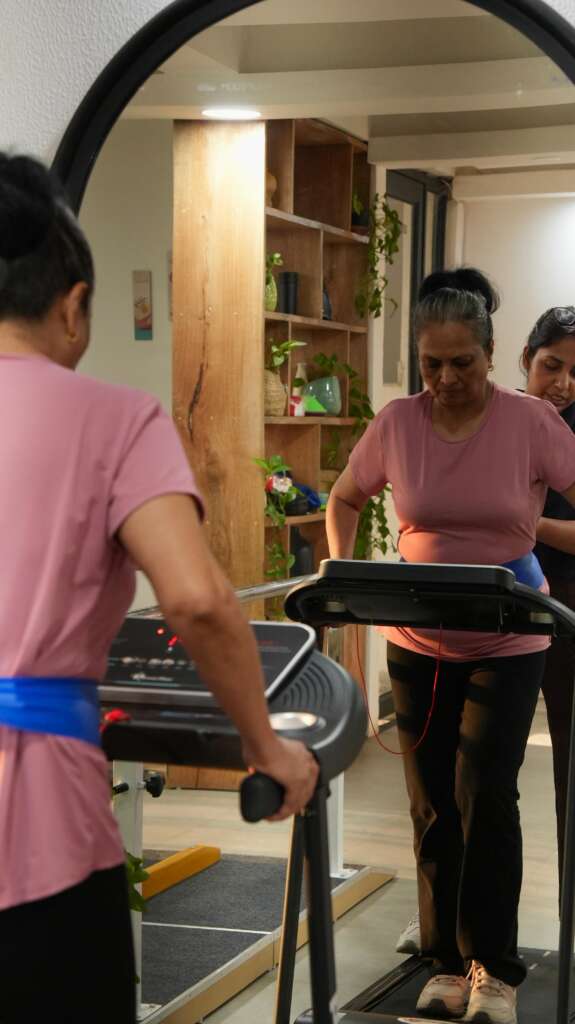
Neurophysiotherapy plays a key role in improving movement quality and helping individuals develop better control over their body. Treatment focuses on balance training, coordination exercises, gait training, posture correction, strength building, and functional task practice. The exercises are carefully designed to improve body awareness, stability, and confidence while moving. Rehabilitation is progressed gradually so that individuals can safely challenge themselves without increasing the risk of falls.
Walking is one of the most common concerns for people with ataxia. Unsteady walking can make daily activities difficult and reduce confidence in leaving the house independently. At NeuroWalk, we provide structured gait training that focuses on improving stability, step control, walking efficiency, and overall confidence. Balance exercises are introduced in a safe and supervised environment before progressing to more challenging activities that resemble real life situations. Our aim is to help individuals move more safely at home and in the community.
Exercise is an important part of managing ataxia because regular movement helps maintain strength, flexibility, endurance, and functional ability. Although rehabilitation may not completely eliminate the symptoms, it can help improve coordination, reduce the impact of balance problems, and support better movement control. Every exercise program is adjusted according to the individual’s abilities so that progress remains safe and achievable.
Education and family involvement are also important parts of rehabilitation. Understanding the condition helps individuals develop realistic expectations and encourages them to remain consistent with therapy. We also guide family members on safe mobility techniques, fall prevention strategies, and home exercises so they can confidently support the rehabilitation process. A supportive environment often improves motivation and helps individuals continue practising outside the clinic.
Recovery and progress in ataxia depend on the underlying cause and the individual’s overall health. Some people experience gradual improvement, while others focus on maintaining their current level of function and preventing further decline. Regular reassessment allows the rehabilitation program to be modified according to changing needs and abilities. Staying active and continuing with prescribed exercises can make a significant difference in long term mobility and independence.
At NeuroWalk, our goal is to help individuals with ataxia improve their balance, coordination, and confidence while performing everyday activities. Through evidence based neurophysiotherapy, personalised rehabilitation, and compassionate care, we work towards helping every individual achieve their highest possible level of independence. With consistent therapy, regular practice, and the right guidance, many people with ataxia can continue leading active, meaningful, and fulfilling lives.