Brain Injury
Brain Injury
A brain injury can affect a person’s life in many different ways. It may happen after a road traffic accident, a fall, a sports injury, a lack of oxygen to the brain, or any other event that causes damage to brain tissue. The brain controls movement, balance, thinking, speech, memory, emotions, and many other important functions. When an injury occurs, these abilities may be affected depending on the area and severity of the damage. Every brain injury is different, which means every person’s recovery journey is also unique. With early rehabilitation, consistent therapy, and the right support, many individuals can make meaningful improvements and regain independence in their daily lives.
The symptoms of a brain injury can vary widely from person to person. Some individuals experience weakness in one side of the body, difficulty walking, poor balance, or reduced coordination. Others may have problems with speech, swallowing, memory, attention, or concentration. It is also common to experience dizziness, fatigue, headaches, changes in behaviour, or difficulty controlling emotions. Some people recover quickly, while others require long term rehabilitation to regain physical and cognitive abilities. The recovery process depends on several factors, including the severity of the injury, the person’s overall health, and how soon rehabilitation begins.
After a brain injury, even simple daily activities can become challenging. Getting out of bed, walking safely, climbing stairs, getting dressed, eating independently, or returning to work may require time and practice. These changes can feel frustrating for both the individual and their family. However, it is important to remember that the brain has the ability to adapt and form new connections through a process called neuroplasticity. This ability allows people to relearn movements and skills with structured rehabilitation and repeated practice.
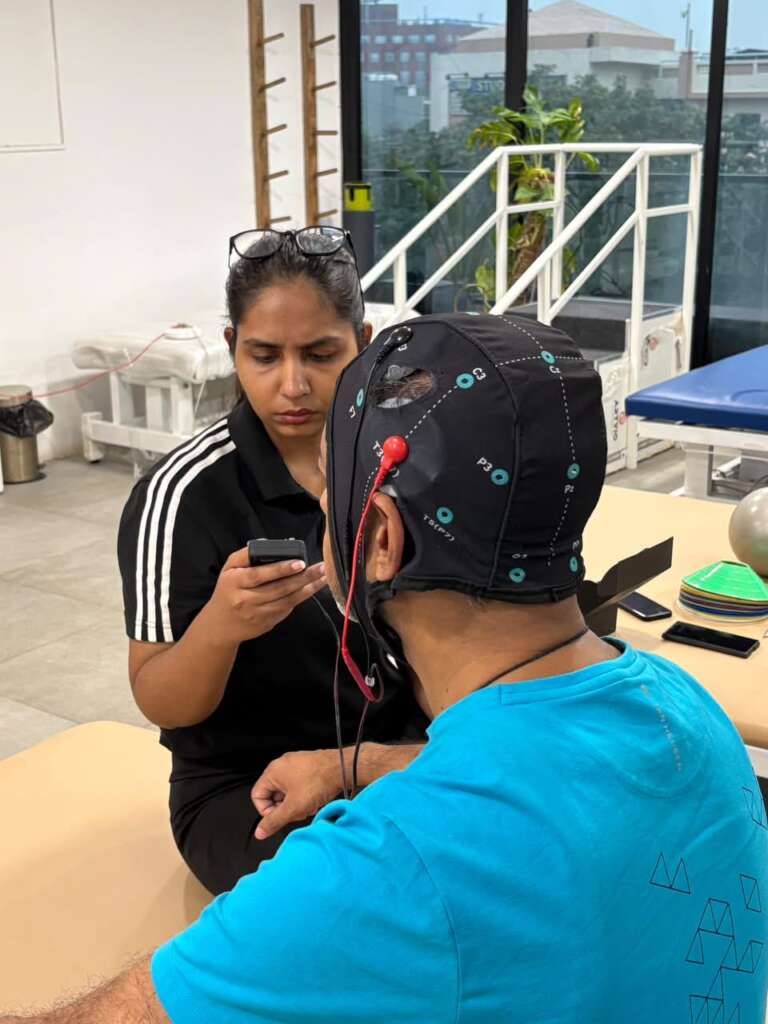
At NeuroWalk, we believe that rehabilitation should be personalised because no two brain injuries are the same. Our first step is a detailed assessment to understand how the injury has affected movement, balance, strength, coordination, posture, mobility, and functional independence. We also evaluate cognitive and physical challenges that may interfere with everyday activities. This helps us create a treatment plan that is specific to the individual’s current abilities and long term goals.
Our neurophysiotherapy program focuses on helping individuals regain safe and efficient movement while improving their confidence during daily activities. Treatment may include balance training, gait training, strength exercises, coordination activities, posture correction, functional task practice, and mobility training. We also work on improving transfers, standing balance, walking endurance, and activities that help individuals become more independent at home and in the community. Every exercise is carefully progressed according to the person’s recovery and tolerance.
Many individuals with brain injuries experience changes in muscle tone. Some muscles may become stiff, while others may become weak. These changes can affect movement quality and make everyday tasks more difficult. Neurophysiotherapy focuses on improving muscle control, promoting normal movement patterns, and reducing physical limitations through evidence based rehabilitation techniques. Repeated practice of meaningful tasks helps the brain learn more efficient movement patterns over time.
Balance and walking are often major concerns after a brain injury. Some people may feel unsteady while standing, while others may need assistance to walk safely. At NeuroWalk, we provide structured gait training and balance rehabilitation to improve stability, reduce the risk of falls, and increase confidence during movement. As recovery progresses, therapy is gradually advanced to include more functional activities that reflect real life situations.
Recovery after a brain injury is not always predictable. Some days may bring noticeable improvements, while other days may feel slower. This is a normal part of the rehabilitation process. Consistency, patience, and regular therapy are essential for achieving the best possible outcomes. Rather than focusing only on how far there is to go, we encourage individuals to celebrate every small achievement because each step forward contributes to long term recovery.
Family involvement is another important part of rehabilitation. Loved ones often become an essential source of encouragement and support throughout the recovery journey. We work closely with families to educate them about safe mobility, positioning, home exercises, and practical strategies that help individuals continue making progress outside the clinic. Creating a supportive home environment plays an important role in maintaining motivation and independence.
At NeuroWalk, our goal is to help individuals with brain injuries rebuild their confidence, improve their functional abilities, and return to meaningful activities whenever possible. Through evidence based neurophysiotherapy, personalised rehabilitation, and compassionate care, we support every stage of the recovery journey. Although recovery takes time, the right rehabilitation can help people improve their mobility, regain independence, and achieve a better quality of life.